Demo 01 ·
COLD START
COLD START is a two-minute 1080p demo at 60 fps in nine scenes. Every pixel and every audio sample is computed by C code, with no assets. Full-quality MP4.
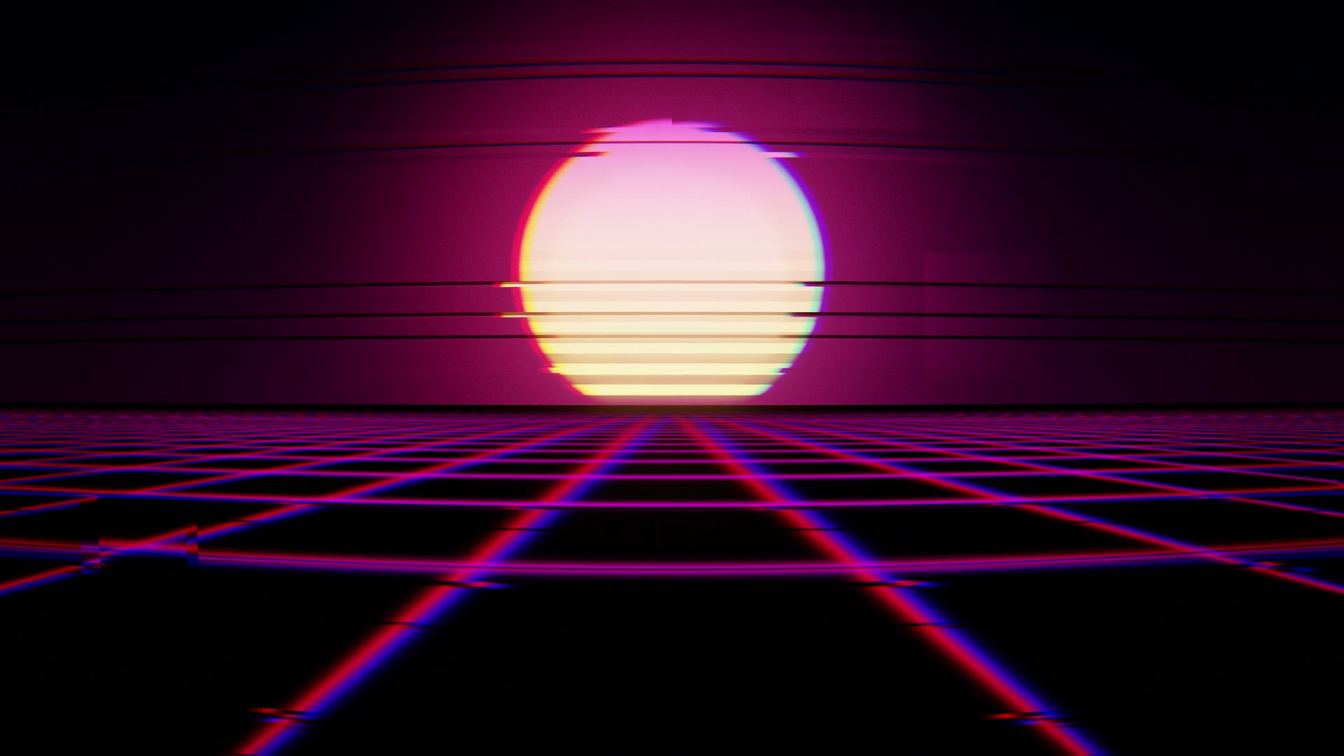
The full 1920×1080 render, never re-encoded. On mobile data, YouTube is the lighter way to watch.
- Length
- 2:00
- Frame
- 1920 × 1080 (16:9)
- Rate
- 60 fps
- Video
- H.264, High profile, 8-bit 4:2:0
- Audio
- AAC-LC, 48 kHz stereo
- Bitrate
- 47.8 Mbit/s average
- File
coldstart-1920x1080.mp4- Size
- 684.6 MiB (717,892,279 bytes)
- SHA-256
e51e371d6c2d9961dcdccf9faacd403f6622828876f268c4c5be62bf8f303aa6- Source
- fkkarakurt/demoscene/tree/main/demos/01-coldstart
- Licence
- MIT
COLD START is a two-minute audiovisual demo at 1920×1080 and 60 frames per second: nine scenes, from volumetric dust and a raymarched tunnel to a Mandelbox and a crystal lattice, cut to a 120 BPM soundtrack synthesised by the same program. There are no image, audio or model files behind it. The film was rendered offline in 6 hours 45 minutes on a four-core laptop CPU, and the file offered here is that render, not a copy re-encoded for the web.
The first of the demos, and the one the engine was built for. Each scene owns the whole frame and is a pure function of time, so any moment can be rendered on its own without playing what came before. Nothing moves on wall-clock time: every animated value is driven off the beat and bar envelopes of the soundtrack, which is what keeps the picture in step with the music.
ScenesPermalink to “Scenes”
| Time | Scene | Technique |
|---|---|---|
| 0:00 | VOID | Volumetric dust, domain-warped fBm |
| 0:08 | IGNITE | Accelerating starfield, motion-streaked trails |
| 0:16 | TUNNEL | Raymarched tunnel, curved spine, six-fold fluting |
| 0:32 | PLASMA | Smooth-minimum metaballs, glass refraction |
| 0:48 | MIRROR | Analytic mirror plane, procedural sky and stars |
| 0:56 | FRACTURE | Block displacement, RGB separation, scanline tearing |
| 1:04 | FRACTAL | Mandelbox, orbit-trap colouring, soft shadows and AO |
| 1:36 | LATTICE | Infinite crystal lattice, copper bars |
| 1:52 | END | Logo, sine scroller, greetings |
The raymarched scenes are distance fields rendered by sphere tracing, and the glow comes from the engine’s bloom, computed in linear light over a mip pyramid.
SoundtrackPermalink to “Soundtrack”
120 BPM, 60 bars, synthesised sample by sample: PolyBLEP oscillators into a TPT state-variable filter, ADSR envelopes, a comb-and-allpass reverb network, a ping-pong delay, and a sidechain compressor keyed off the kick. The master sits at −10.6 LUFS with 13.1 LU of loudness range. Band-limiting the oscillators is the change that stops a synthesised sawtooth from aliasing.
How it was renderedPermalink to “How it was rendered”
1920×1080 at 60 fps with two anti-aliasing samples and two temporal subsamples: every frame is rendered twice across a 0.75 shutter and averaged, which is real motion blur and close to the 270° shutter most film is shot with. That took 3.38 seconds a frame and 6 hours 45 minutes for the whole film on a four-core laptop, spread over every core by a parallel-for on an atomic counter.
It is not real time and does not need to be. A frame computed in three seconds still plays at 60 fps once it is in a video file, and that is what pays for the sample counts and the blur. The H.264 encode ran at a CRF of 14, close to visually transparent, which is why the file is as large as it is.